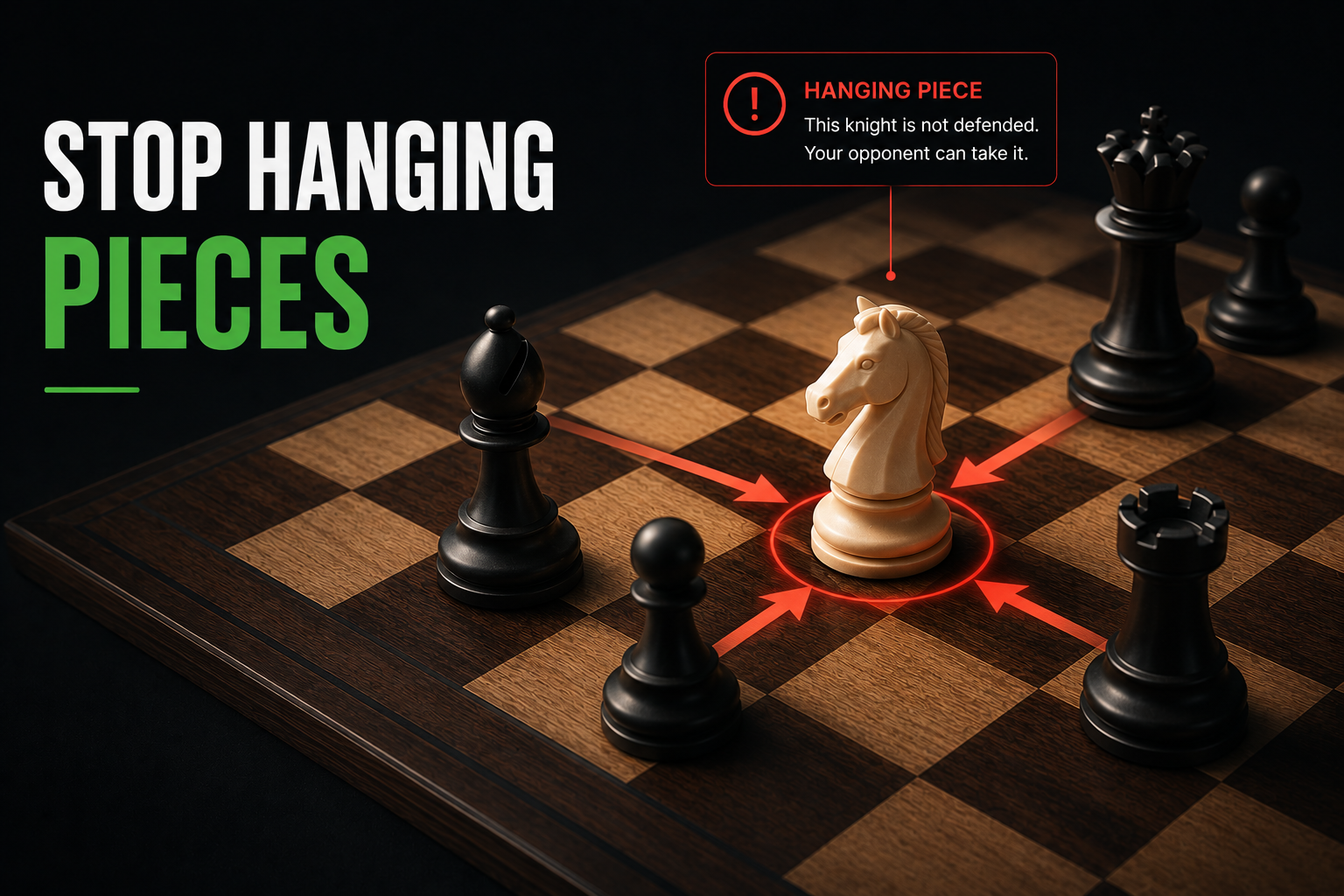
You already know the feeling: the move leaves your hand, your opponent captures, and the mistake becomes obvious one second too late.
This guide is about removing that pattern. Not with theory. Not with memorized openings. With a simple board-scan habit you can use before every move.
Key TakeawayHanging pieces are not a knowledge problem. They are usually a speed and attention problem.
What is "hanging" a piece?
A piece is hanging when it is left with no protection and your opponent can take it without paying a price.
Why it keeps happening
You focus on what you want and miss what your opponent can do.
The problem appears one second after the move is already on the board.
Moving a defender can leave something else exposed.
Chess is a conversation
After your opponent moves, listen before you answer. Every move creates a new threat and leaves something else behind.
The habit that changes everything
Before you move, pause long enough to answer one question:
What can my opponent take after this?
That question sounds basic, but it changes how you see the board. You stop playing only your idea and start seeing the opponent's reply.
What to practice this week
- Play rapid games where you have time to think.
- Name loose pieces before calculating attacks.
- Check what your move stops defending.
- Review only the first clean material blunder after each loss.
Key TakeawayThe goal is not perfect chess. The goal is to stop donating pieces for free.